

Culture of Agriculture Courses
The Culture of Agriculture curriculum puts culture at the center of agriculture. Through courses, workshops, and field days, participants learn to use Wendell Berry’s writing to advocate for healthy land and communities; understand their places in agricultural history; determine affordable, farm-based solutions; cultivate an agricultural economy of cooperation, parity, and democracy; and practice neighborly leadership.
Agrarian Voices Study
Fall Agrarian Voices Study
Readings in Agriculture: An Agrarian Literature Survey
OCT 15 - NOV 12 Registration is open!
Limit 20 participants. Reduced-rate scholarships are available for farmers and residents of Henry County.
The Farm and Forest Institute offers 3 Agrarian Voices Study courses per year. These classes combine Wendell Berry’s writing and The Berry Center’s mission with agricultural literature, practical examples, and lectures. The courses provide resources for in-depth study of topics introduced in The Berry Center’s Agrarian Voices Distinguished Lecture Series. This humanities-based series features Kentuckians of notable imagination and understanding of farming, rural life, agricultural economics, and agrarian thought and history.
The Agrarian Voices Study classes combine the tradition of study clubs and Chautauqua lectures. Historically, these programs cultivated civic engagement and community cohesion through intellectual, artistic, and practical pursuits—all vital for establishing and strengthening cultural foundations of democracy.
Our agrarian study club provides unique access to The Berry Center’s resources and an opportunity to contribute to our mission: advocating for farmers, land-conserving communities, and healthy regional economies.
Winter/Spring Writing for the Farm: Advocacy & Leadership
Summer What Has Happened Here: Agricultural History
Fall Readings in Agriculture: An Agrarian Literature Survey
Participants may register for any of the 3 study sessions offered throughout the year.

Each Agrarian Voices Study consists of:
Access to a Collection of Resources
Readings, prompts for reflection and place-based exercises, & additional materials for extended study
Agrarian Voices Lectures by Kentucky Writers, Farmers, & Leaders
These public lectures enrich the study of farming, rural life, agricultural economics, and agrarian thought and history. Lectures are recorded and shared at a later date for those who cannot attend.
Group Discussion Opportunities
Gather with fellow participants to reflect on readings, exercises, thoughts, and ideas. A Zoom link is available for those who cannot attend in-person discussions.
A Humanities Field Day (in-person only)
Participants complete the majority of the self-paced coursework at home, on their own time. They expand their learning in Henry County, Kentucky, through group discussions, lectures, and a humanities field day guided by The Berry Center staff. To provide access to the most people, the classes do not bear academic credit, but the materials are as robust, rigorous, and captivating as you would find in most college and continuing education courses. This community education program is open to all– from urban to rural and from those who farm to people who support farmers.
The Berry Center’s Farm and Forest Institute courses are made possible through a combination of registration fees and generous support from the NoVo Foundation. Thanks to this funding, the Institute provides educational opportunities for a range of farming and farm-supporting constituencies. The Agrarian Voices Distinguished Lecture Series is sponsored by The Josephine Ardery Foundation and by a host of generous donors.
Reading in Place: Ellen Davis’s Agrarian Reading of the Bible
Thursday, September 10, 2026
2:00pm - 4:30pm at The Berry Center Farm or via Zoom
Cost: $40*
“If you listen willingly, the good of the land you shall eat.” (Isaiah 1:19)
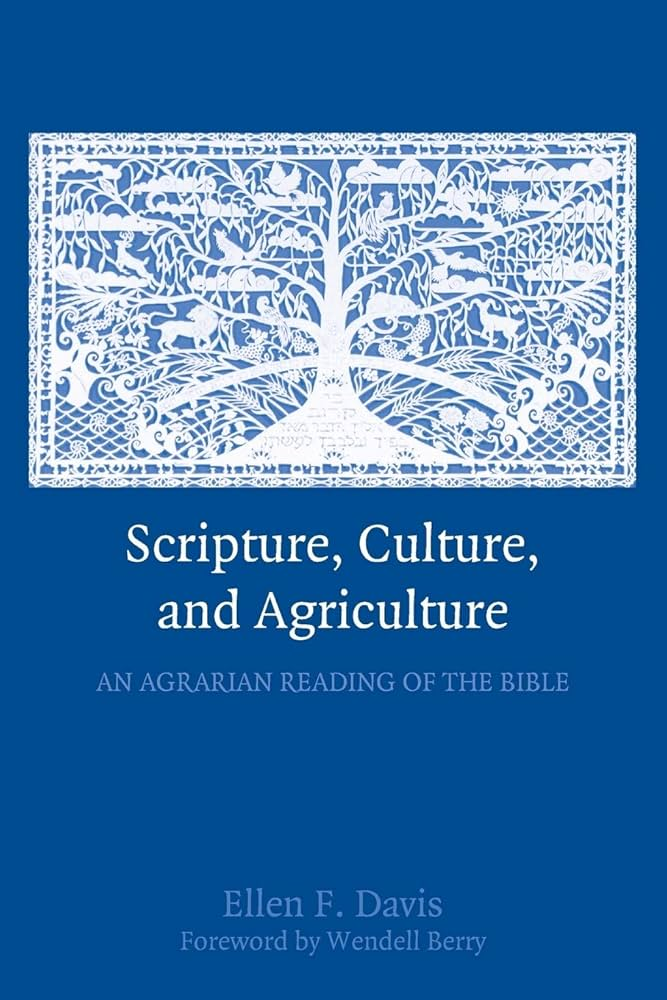
Acclaimed theologian Dr. Ellen Davis opens her agrarian reading of the Old Testament with these words. It is but one of the many biblical scriptures about farming that Davis calls on to show how “the message of the earliest prophetic writers of the Bible was distinctly ‘agrarian’” (120).
Davis, a Duke Divinity School Distinguished Professor of Bible and Practical Theology, will deliver The Berry Center’s annual Wendell Berry Lecture on Thursday, September 10 (6:30-8:00pm) in New Castle, Kentucky. Before the lecture, you are invited to study selections from her important book Scripture, Culture, and Agriculture (2009). As Wendell Berry wrote in the Foreword, “This book will be welcomed gladly by readers interested in the Bible’s sense of our economic life and our ecological responsibilities. Reading it is a pleasure and a help.”
Two Henry County neighbors will lead the discussion: Dr. John Inscore Essick, co-Pastor of the Port Royal Baptist Church and Professor of Church History and Director of the Rural Ministry Program at BSK Theological Seminary, and Dr. Leah Bayens, Director of The Berry Center’s Farm and Forest Institute.
*Ticket price includes:
Wendell Berry Lecture ticket (in-person): Tickets for this popular lecture will go quickly, and you’ll secure a spot in the audience. Anyone who cannot attend in person may watch the lecture when it is broadcast on YouTube and social media at a later date.
Scanned Chapters: The co-instructors provide excerpted chapters for reading and discussion.
A hard copy of the book may be purchased in advance from The Bookstore at The Berry Center. Copies will also be available for purchase at the lecture.
Hybrid Discussion Session: You may participate in the study in-person at The Berry Center Farm in Port Royal, Kentucky or via Zoom. The session will be led by Dr. John Inscore Essick and Dr. Leah Bayens.
Guide: The course instructors assemble a reading and discussion guide for study participants. Dr. John Inscore Essick brings to bear years of experience teaching Scripture, Culture, and Agriculture and agrarian theology.
Reading in Place: Wendell Berry’s Jayber Crow
“This is a book about Heaven, but I must say too that . . .
I have wondered sometimes if it would not finally turn out to be a book about Hell.”
Tuesday, August 18 5:30-7:00pm Discussion Session (hybrid, in-person & zoom options)
Saturday, August 22 10:00am - 3:00pm Humanities Field Day, In-person at The Berry Center Farm
Cost: $75
Participant limit: 15 (course full; waitlist option)
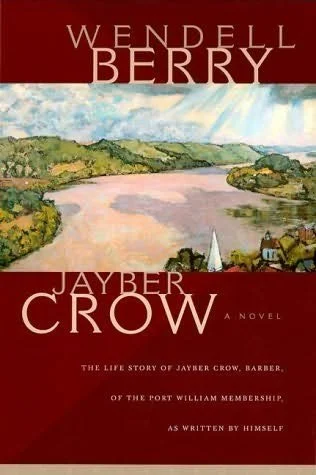
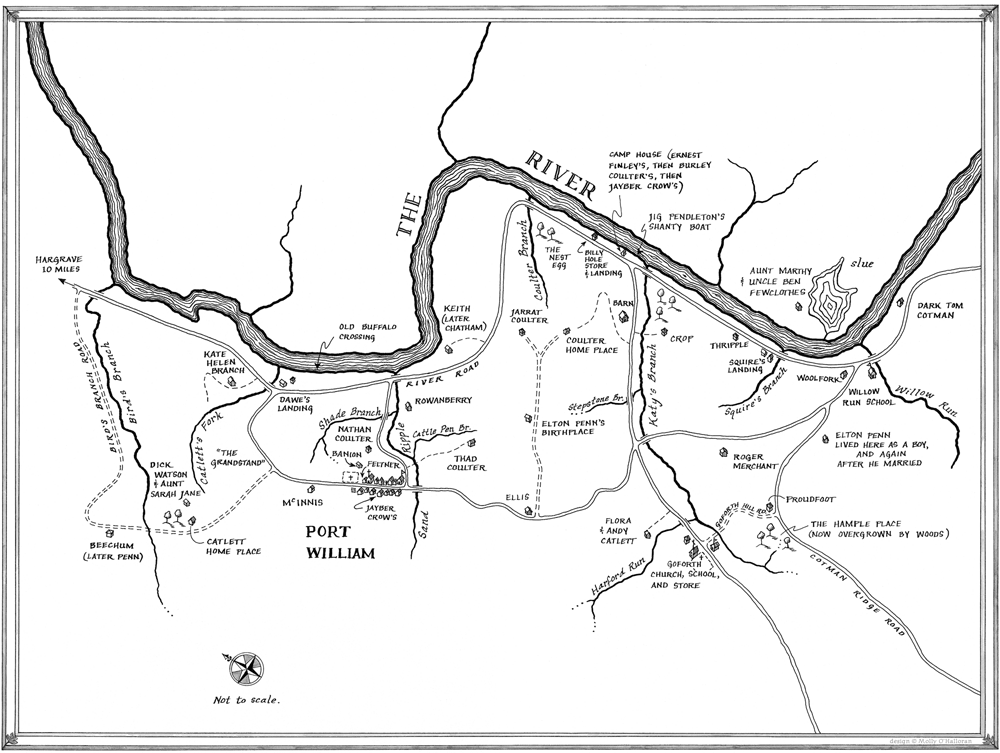
What’s your favorite Wendell Berry novel? Over and again, people respond: Jayber Crow. Experience this moving story through discussion and a field retreat in Henry County, Kentucky. Guided by Farm & Forest Institute Director Leah Bayens, you’ll traipse through field and forest, town and country, connecting to the places represented in the novel and contemplating how lived experiences and stories kindle affection for people, land and community. In this “Reading in Place” study, participants will receive a reading guide filled with discussion questions, supplemental resources (maps, articles, images, et al.), and hands-on exercises–to be used while reading at home and while at The Berry Center Farm, exploring the landscapes captured in Jayber Crow.
Follow the barber’s full circle life on and above the banks of the river–from his earliest memories as an orphaned boy to his spiritual coming-of-age and then on to his Port William homecoming and membership. Like the neighbors whose hair he trims, Jayber struggles and grieves; he rejoices and loves. Yet he finds himself simultaneously within and outside their lives, bearing witness to the tragedy of industrialism in farming. Although Jayber does not farm, he is the consummate agrarian. He is a person capable of fitting his mind to the land. He is not the man born to farming, but he is a piece of the fabric that supports the farmers–all from the perch of a hand-me-down barber chair, from the heights of the secret “Grandstand” gathering spot, and from a long-legged river camp house, quietly snipping hair.
Write Your Rural Story Submissions from previous sessions
This 2-day workshop was designed for those who are beginning to collect and write their personal stories of family and rural places. Georgia Green Stamper led the sessions at The Berry Center’s Agrarian Cultural Center. Participants had the option to submit their final pieces for inclusion in The Berry Center Archive and for possible publication in our newsletters.
Henry Countian Darlene Hawkins Tipton enrolled in the 2024 rural memoir class led by Owen County’s Georgia Green Stamper. Darlene had the farming stories in her head, but she says, “The class gave me the courage to write my stories.” Her account reminds us that “every leaf mattered in tobacco.” Quality mattered then, and it matters now. This is a central value driving The Berry Center’s mission.
2024 Memoir Workshop Participant Essay, by Darlene Hawkins Tipton
“Finding a copy of my Papaw's pear preserve recipe in an old church cookbook recently drew me back to my grandparents' former home. I knew precisely what the vague instructions called for when it said, ‘Cook 'til they are the right color,’ remembering the deep amber hue needed for the best flavor.” Kristin Harrison Taylor wrote these lines during our second annual “WriteYour Rural Story” workshop with celebrated Kentucky memoirist Georgia Green Stamper.
2025 Memoir Workshop Participant Essay, by Kristin Harrison Taylor
“That was 1960. What I didn’t really understand yet was that as we were gathering as a family that Thanksgiving Day, all of us full of life and problems—that very day we were already falling apart. We were falling apart to be put together again. We were going our separate ways or just growing up or dying or moving on into other lives to live for all of us someplace else. And the world around us was about to move, too, rearrange itself, convulse and give birth in ways we could not imagine. It was all just around the corner. However, someday we would be frozen in time and silent just like Mrs. E.J. McKay.” Leroy Franklin McKay penned these lines during the third annual “Write Your Rural Story” workshop taught by Owen County’s own Georgia Green Stamper.
2026 Participant Essay, submitted by Leroy Franklin McKay